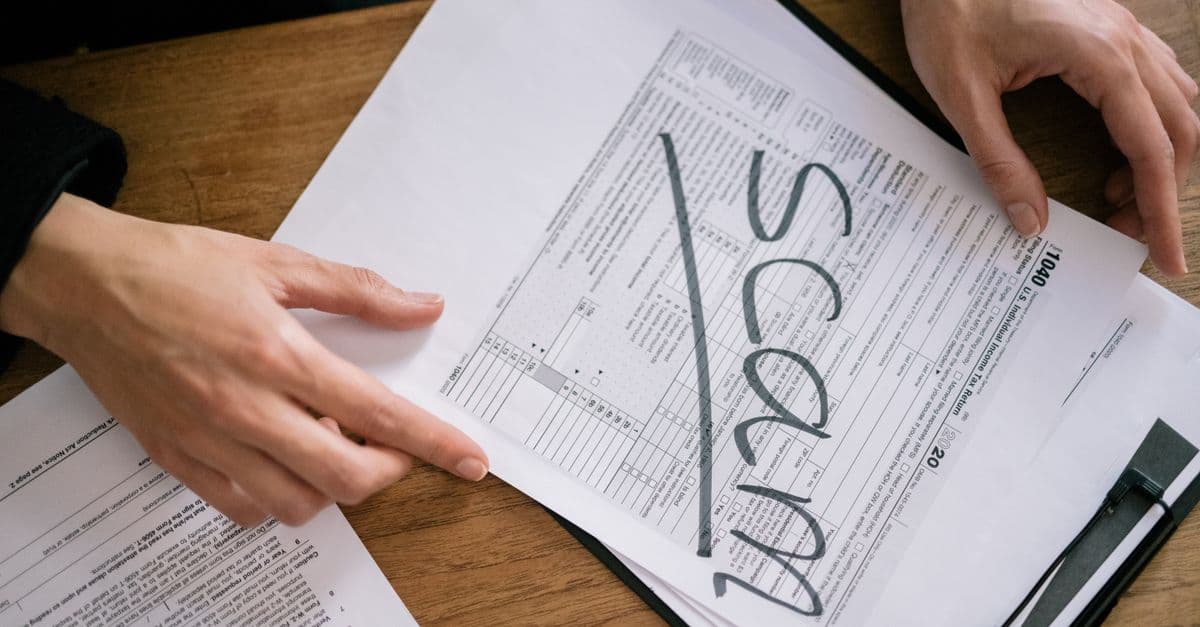
Payroll Taxes Explained: Where Your Paycheck Money Actually Goes
A plain-English breakdown of payroll taxes in 2026: FICA, Social Security and Medicare rates, what your employer pays, and why the self-employed pay both halves.
Look at the gap between your gross pay and what actually lands in your bank account and you'll find a stack of deductions, most of them taxes. The biggest mandatory chunk for most workers isn't income tax at all — it's payroll tax, the money that funds Social Security and Medicare. Almost everyone pays it, and almost nobody understands exactly how it works.
This isn't tax advice, and it won't replace a CPA at filing time. But understanding payroll taxes helps you read your pay stub, sanity-check your withholding, and catch errors. Let's break down where the money goes.
FICA = Social Security + Medicare
Payroll taxes are collected under a law called the Federal Insurance Contributions Act, which is why you'll see "FICA" on your pay stub. FICA is really two separate taxes bundled together: Social Security and Medicare. Together they fund retirement benefits, disability, survivor benefits, and federal health insurance for people 65 and older.
Unlike income tax, FICA isn't based on brackets and deductions. It's a flat percentage taken off your wages from the very first dollar. That's part of why even low earners who owe little or no federal income tax still see a meaningful bite taken out of every check.
The Social Security tax: 6.2% up to a cap
Social Security tax is 6.2% of your wages, withheld from each paycheck. The catch is that it only applies up to an annual wage base limit, which the government adjusts upward most years for inflation (it sits in the low $180,000s for 2026). Earn above the cap and you stop paying Social Security tax on the excess for the rest of the year.
So a worker earning $50,000 pays 6.2% on all of it — $3,100. A worker earning $300,000 pays 6.2% only up to the cap and nothing on the rest, which is why Social Security tax is often called regressive. If you change jobs mid-year, each employer restarts the cap, so you can briefly over-withhold; you reclaim the excess on your tax return.
The Medicare tax: 1.45% with no cap
Medicare tax is 1.45% of your wages — and unlike Social Security, there's no upper limit. Every dollar you earn is subject to it. On a $50,000 salary that's $725 a year.
High earners pay extra. An Additional Medicare Tax of 0.9% kicks in on wages above $200,000 (for a single filer), so the top Medicare rate effectively becomes 2.35% on income over that threshold. Your employer starts withholding the extra 0.9% once you cross $200,000 in wages with them, regardless of your filing status — you square it up at tax time.
What it adds up to on your check
For a typical employee, the combined FICA withholding is 6.2% + 1.45% = 7.65% of gross wages. On a $1,000 gross paycheck, that's $76.50 gone to FICA before income tax even enters the conversation.
If you're trying to reconcile an hourly job against a salaried offer and want to see your true gross before these deductions, the salary-to-hourly calculator converts an annual salary into an equivalent hourly rate. And remember that overtime hours are FICA-taxable too — there's no payroll-tax break for working extra, so the overtime calculator shows gross overtime pay, not take-home.
Your employer pays an equal share you never see
Here's the part most workers don't realize: your employer matches your FICA dollar for dollar. For every $76.50 withheld from your $1,000 check, your employer sends another $76.50 to the IRS out of its own pocket — 6.2% Social Security and 1.45% Medicare on top of your wages.
That's why your true cost to an employer is more than your gross salary. Employers also pay federal and state unemployment taxes (FUTA and SUTA), which you never see on your stub. It's worth knowing this when you negotiate: the labeled salary already costs your employer roughly 7.65% more in payroll tax alone.
Self-employed? You pay both halves
When you work for yourself — freelancing, gig work, running a small business — there's no employer to cover the other half. So you pay the full 15.3% yourself: 12.4% for Social Security (up to the wage cap) and 2.9% for Medicare. This is called self-employment tax, and it catches a lot of first-year freelancers off guard.
The system softens the blow two ways: you can deduct half of your self-employment tax on your income-tax return, and the Social Security portion still stops at the same annual wage cap. Even so, if you're misclassified as an "independent contractor" when you're really an employee, you're effectively eating your employer's half of FICA. That misclassification can also mean you've been cheated out of overtime — see our note on the regular rate of pay and check whether you've been wrongly labeled exempt.
Frequently asked questions
Are payroll taxes the same as income tax? No. Income tax (federal and, in most states, state) is separate, based on brackets, your filing status, and your withholding choices on Form W-4. FICA is a flat payroll tax for Social Security and Medicare. Both come out of your check, but they fund different things and follow different rules.
Can my employer withhold FICA from my tips? Yes. Tips are taxable wages, so Social Security and Medicare apply to reported tips. If you're a tipped worker, that's one more reason to make sure your tips are being reported and your base wage is legal — our tipped wage calculator helps you check the cash-wage side.
Why did my Social Security tax stop late in the year? Because you hit the annual wage base cap. Once your year-to-date wages with one employer exceed the limit, Social Security tax stops for the rest of the year, though Medicare keeps coming out on every dollar.
Read your stub line by line
The single most useful habit is to actually read your pay stub each period. Find the FICA or separate Social Security and Medicare lines, confirm they're roughly 6.2% and 1.45% of your gross, and make sure your gross itself is right — correct hours, correct rate, correct overtime.
Payroll-tax errors are rare; wage errors are common. If your gross pay looks low because overtime is missing or your rate is wrong, that's the real money leak. Run a recent paycheck through the overtime calculator to confirm your gross is correct before the taxes ever come out. Authoritative figures on the federal side are published by the IRS and the DOL Wage and Hour Division.